
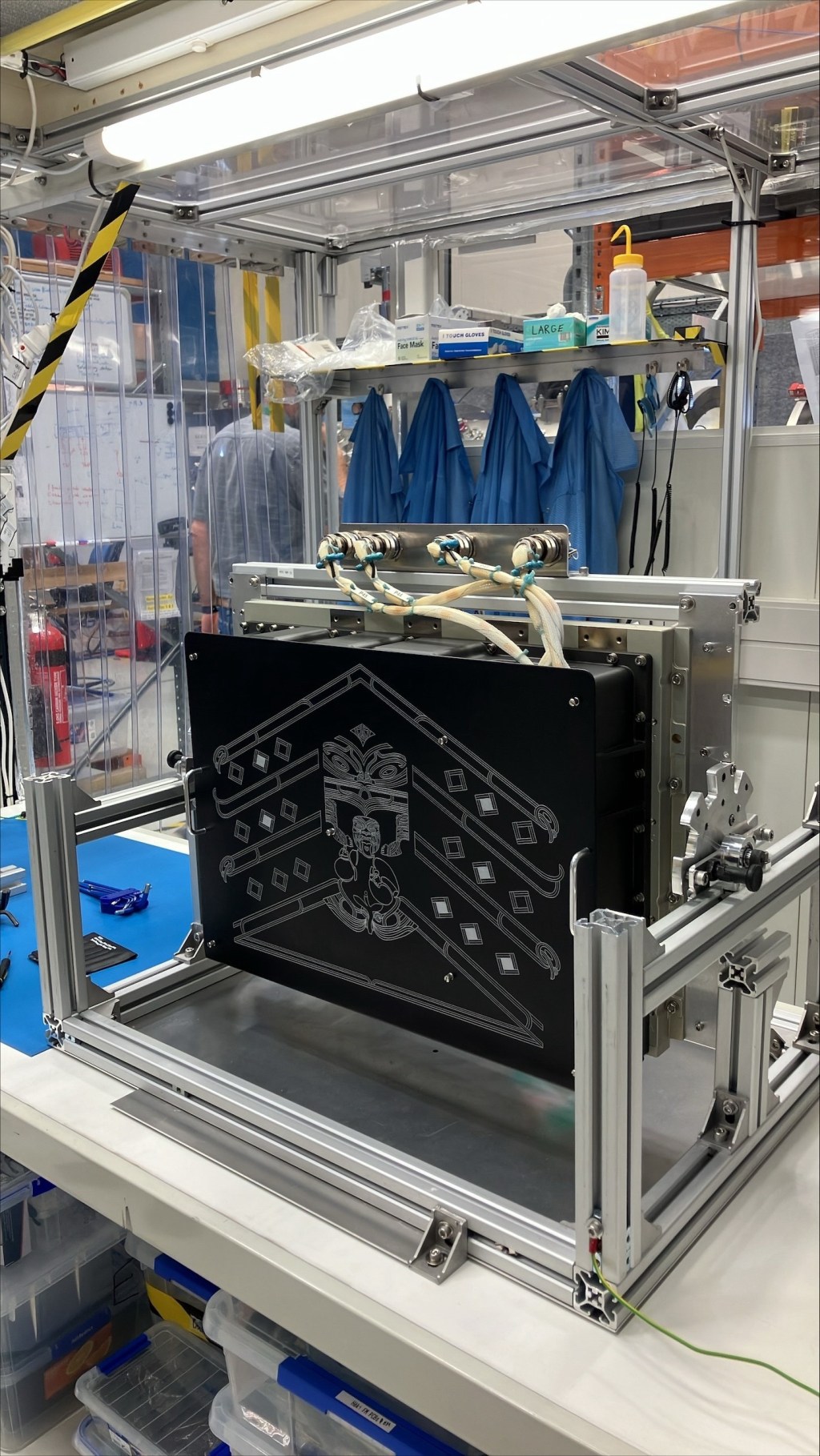
Hēki completed its journey back to our lab and has successfully completed its post-shipping checkout. Our team was excited to welcome Hēki home.
The first thing we did was to double check that Hēki’s crate was undamaged and that sensors placed on the box prior to its shipment from Houston had not detected significant tipping or hard bumps that might have damaged it in transit. While Hēki’s shipping crate is designed to protect it in the case of rough handling, we were pleased to see that there was no evidence of damage and are grateful to all of the people who transported Hēki safely back to us.
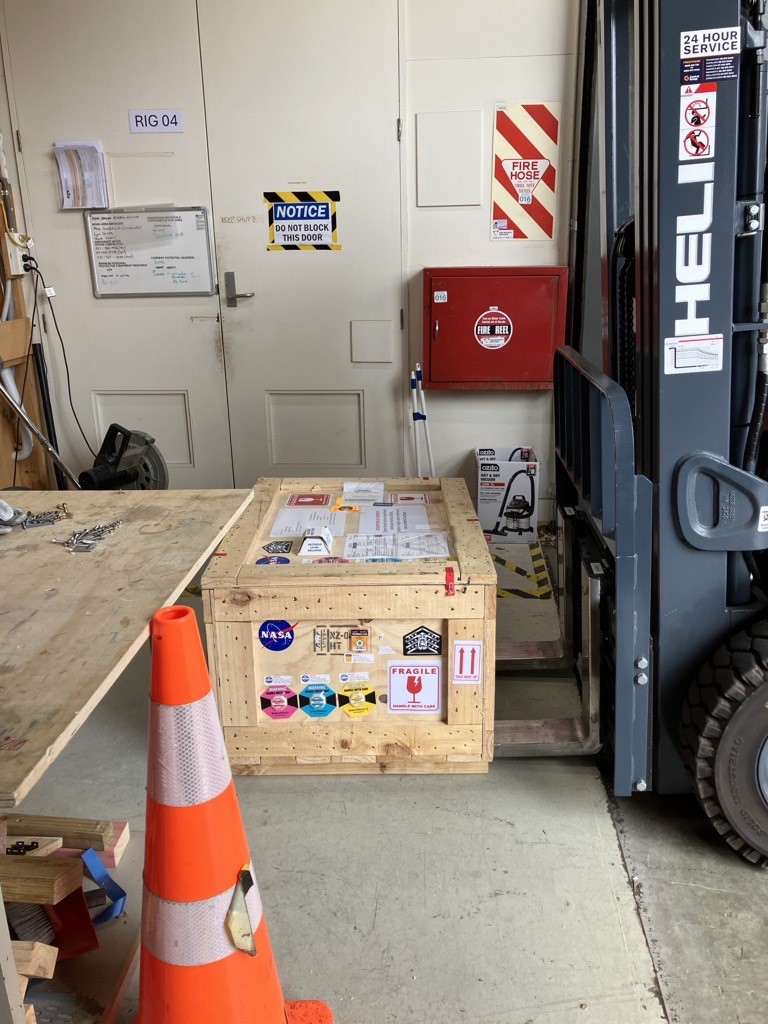
Forklift driver delivers Hēki’s shipping crate to our loading dock at Paihau-Robinson
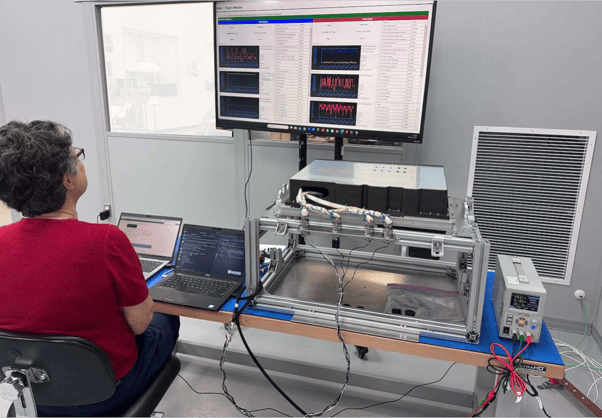
Next, we unpacked Hēki and visually inspected it to confirm that it had sustained no damage during packing and shipment. We then placed it onto a workbench to repeat the post-flight functional test completed prior to shipping Hēki from Houston. With this brief checkout successfully completed, we were able to confirm that all of Hēki’s systems were still operational. Our team will now move Hēki into a chamber that simulates the vacuum of space, so that it will be possible to fully test Hēki’s performance, including cooling Hēki’s magnet to the cryogenic temperatures (approximately -200C) necessary for the magnet to become superconducting again. It’s not possible to do this testing outside of a vacuum chamber, as humidity in the air would condense on Hēki’s cold components.
Our team will spend the next few months characterising Hēki’s post-flight performance and comparing the results to those obtained before and during Hēki’s flight. This will allow our researchers to look for any changes or potential degradation caused by time or exposure to the environment of space. We’ll continue to post updates from time to time as we learn more!
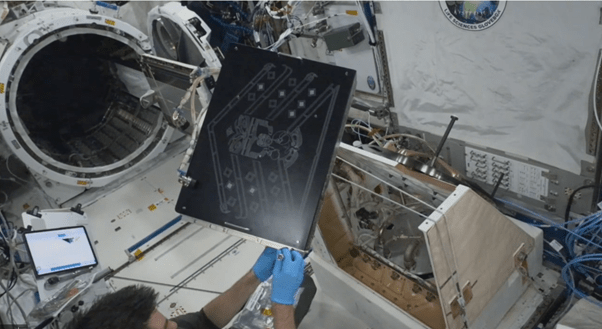
Header image: Hēki on a workbench in our lab, ready for post-ship testing
 Paihau—Robinson Space Blog
Leave a comment