
Operations Update:
Over the past several weeks, the Hēki team has continued to collect increasingly detailed data on Hēki’s performance under a variety of operating conditions, including data during two intentional magnetic “quench” events. The quench data is crucial to establish Hēki’s technology as practical and robust to the types of faults that occur in spaceflight, while the performance data will show our team potential paths to improve future designs.
Also, our team has received word that Hēki’s extended mission will complete in late March (rather than early April) – this change is driven by the need to coordinate with other activities on the ISS and may continue to evolve as logistics are finalised. In response, the Hēki team has focused on planning and prioritising activities in our remaining time on the ISS.
Hēki team developing plan for end of Hēki’s operations on the ISS
The end of Hēki’s mission on the International Space Station (ISS) is still weeks away, but our team is already planning how to safely return Hēki to the interior of the ISS and from there to Earth. One of our mission success criteria is to fully characterise Hēki’s performance in our lab after its operations on the ISS, and so we need to ensure that Hēki survives the journey intact.
One of the biggest challenges we need to solve is – ironically – tied to Hēki’s excellent thermal performance: its ability to get (and stay) very cold. Hēki is designed for the near-vacuum outside of the International Space Station, where its magnet is maintained at the cryogenic temperatures needed for high temperature superconductors to operate (-200C). Inside the space station – or on the surface of the Earth – humidity in the air would condense on a surface so cold, like water droplets on a cold drink. This water might corrode the materials used to construct Hēki or damage its electronics. So, before we bring Hēki back inside the ISS, it’s vital that we find a way to gently warm Hēki above the “dew point”, the temperature below which water would condense on it.
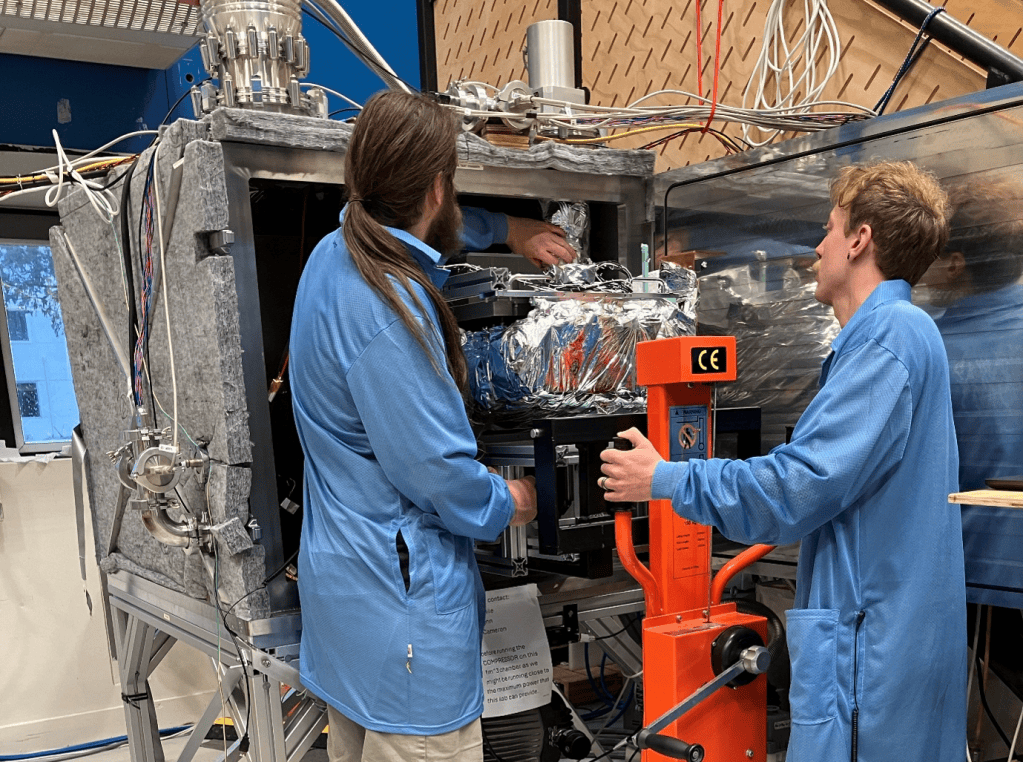
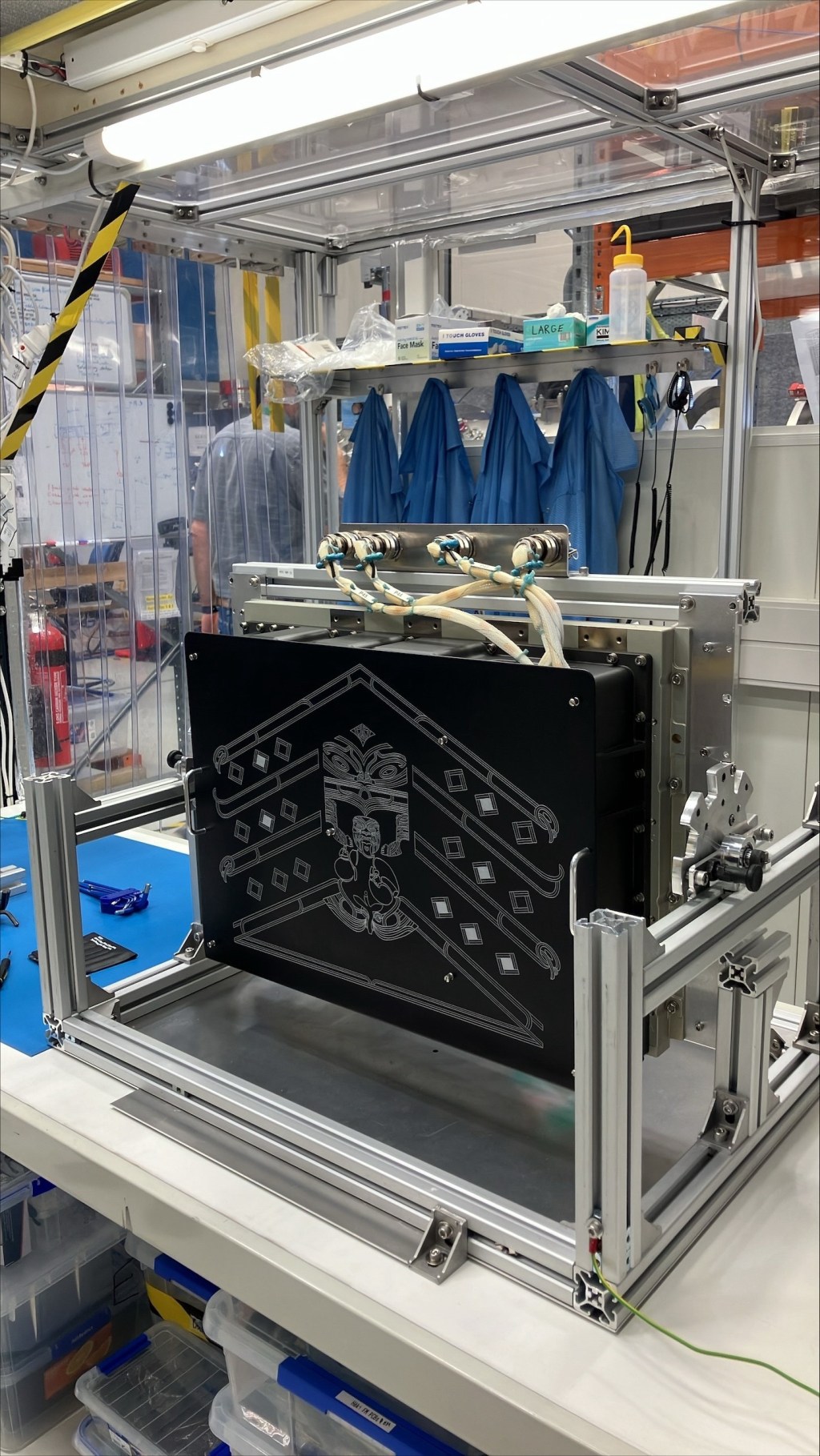
Over the past several weeks, the Hēki team figured out the best way to accomplish this warming and determine how long it will take. Our engineering model – Hēki’s Earth-bound twin – mirrors both Hēki’s science and thermal behaviour. Using the “EM”, we were able to test how long it will take to safely warm Hēki. Simulating Hēki’s thermal environment on the ISS, we estimate that it will take several days for Hēki’s magnet to transition from cryogenic temperatures to room temperature.
With this information in-hard, we can now work backwards from the date scheduled for bringing Hēki back inside the ISS (reversing the installation process) and set a time to power off Hēki’s cryocooler and start warming up the system in preparation for Hēki’s return.
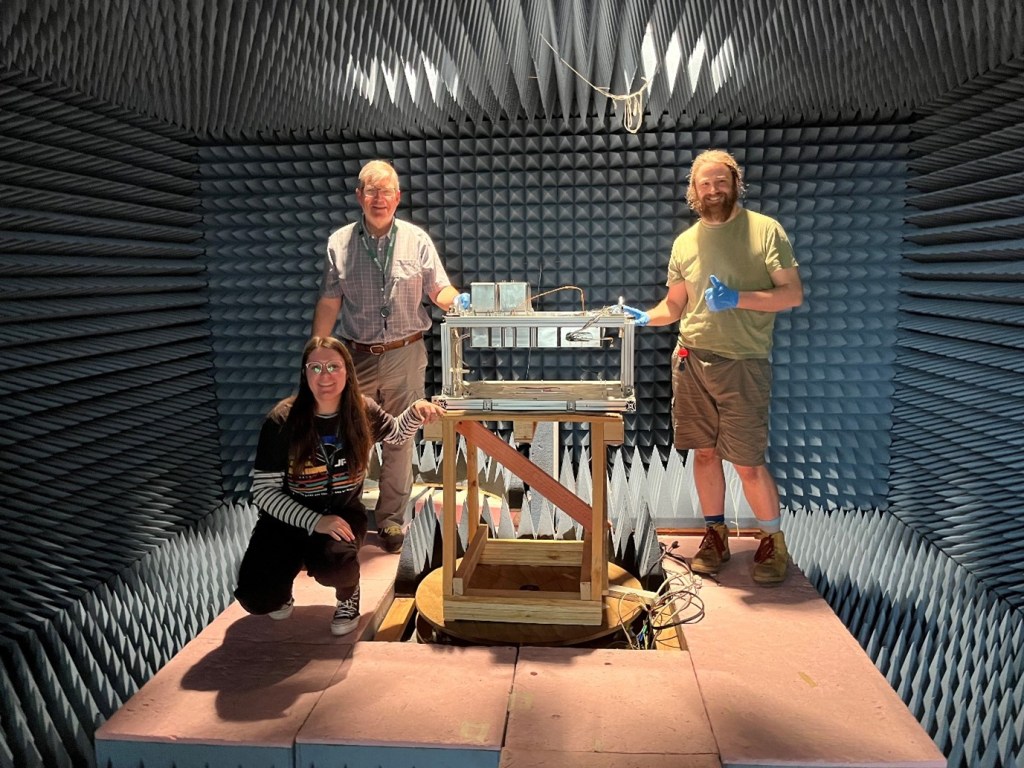
Header image: Engineers pictured with Hēki’s engineering model (EM). Hēki’s EM has been used as a pathfinder for many Hēki activities, like the thermal testing described in this post. It was also used for early electromagnetic compatibility testing. In this image, the EM is shown in an anechoic chamber. This facility filters out spurious signals (radio waves, WiFi, and other sources of potential interference with the test), so that only signals from Hēki’s EM were measured. The same test was later repeated with the flight version of Hēki, once the team had developed and refined their test procedures using the EM.




Leave a Reply