

What are Hēki (and Kōkako)?
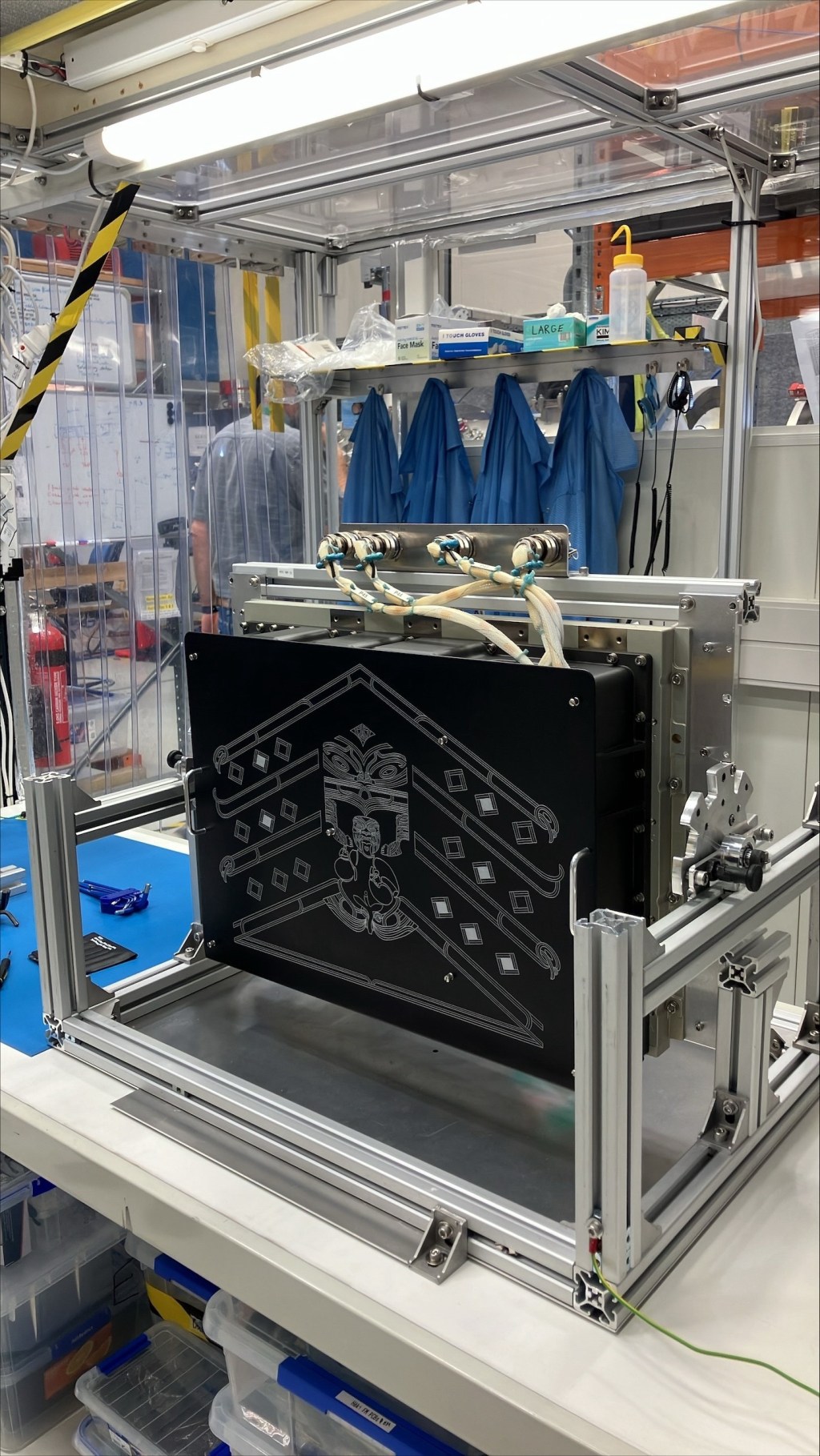
Hēki (te reo Māori for “egg”) is a technology demonstration experiment that is launching to the International Space Station (ISS) later this year. During its (approximately) 15 weeks on the ISS, Hēki will validate that several novel technologies are compatible with launch and operations in space. These experimental components will improve the efficiency of spacecraft ion thrusters used for moving and orienting spacecraft. The cutting-edge technologies include a high-temperature superconducting magnet, the “flux pump” power supply to energize it, and custom control electronics to orchestrate its operations (the bagel-shaped/sized magnet and its flux pump are pictured above). Hēki includes two radiation sensors as well to characterize the shielding effect of Hēki’s magnetic field, another potential application of the superconducting magnet technology. A complementary laboratory effort – named Kōkako after the native bird with a distinctive blue wattle – is quantifying the improvement in ion thruster performance resulting from application of the magnetic field. Together, Hēki and Kōkako will demonstrate a path to developing and commercializing these new technologies. While the blog will focus on Hēki’s space mission, exciting results from Kōkako and related work will also be shared here from time to time.
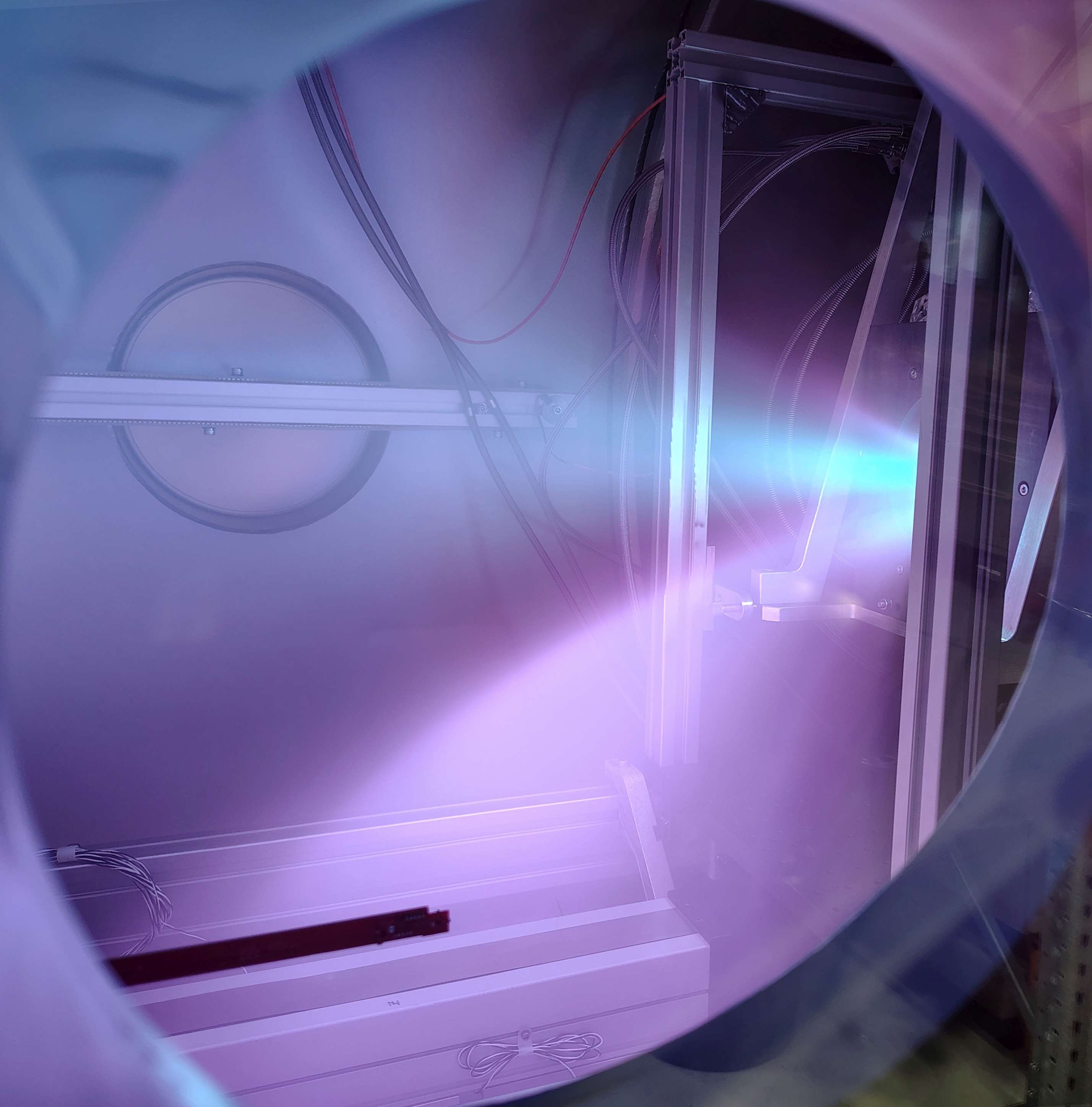
Figure: Kōkako thruster under test in Paihau—Robinson vacuum chamber, which simulates the vacuum of space. The thruster is mounted on a fixture which collects very precise measurements of thrust to characterise the thruster over a range of operating conditions. Credit: Emile Webster
Who is involved?
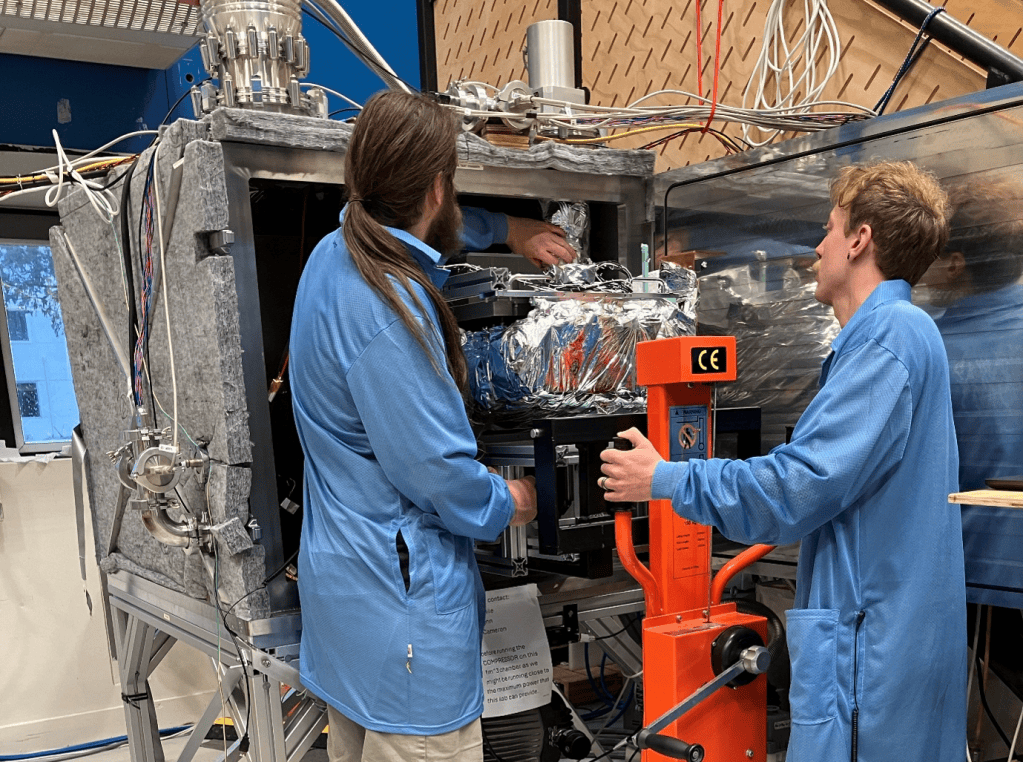
Hēki and Kōkako were designed, built, and tested at Te Herenga Waka/Victoria University of Wellington’s Paihau—Robinson Research Institute, with team members from IDS Consulting, Asteria Engineering Consultancy, University of Auckland, and University of Canterbury contributing to its successful completion. Development was enabled by a grant from Aotearoa New Zealand’s Ministry of Business, Innovation and Employment. Researchers at the Czech Technical University in Prague contributed radiation sensors to assess the effect of Hēki’s magnetic field on the local charged particle environment. Voyager Technologies (formerly Nanoracks) will coordinate Hēki’s launch, deployment, and operations with the ISS. We are thankful to Te Herenga Waka/Victoria University of Wellington Deputy Vice Chancellor (Māori) Rawinia Higgins for gifting the names “Kōkako” and “Hēki” to us, and Māori artist Reweti Arapere for designing the iconic art for Hēki’s protective cover (preview available here, and more details here).


Leave a Reply