
Two nights ago, an anomaly occurred in the system which supplies power to Hēki, and Hēki was unexpectedly powered off as a result. Yesterday we worked with our mission management team at Voyager Technologies to start the recovery. Hēki was found to be in a stable and safe state after being powered back on.
We confirmed that all of the data received from Hēki was as expected given the power cycle, and the amount of power it was drawing was also as expected. The team gathered enough information to determine that it was safe to re-start Hēki’s cryocooler to restore the magnet to its operating temperature. This morning, we confirmed that the overnight cooldown went as expected, and then we successfully re-energised the magnet to full field with no detectable change in performance. We will confirm that all of Hēki’s systems continue to function nominally for an extended period over the holiday.
Hēki was designed to survive an unexpected loss of power (related technical paper here). The main risk in such a case is that the magnet will warm when Hēki’s cryocooler powers off. When the temperature of the magnet and flux pump system exceeds a critical temperature, the system will no longer be superconducting (ie, it will no longer be free of electrical resistance). When this happens, the energy stored in the magnet – the electric current flowing through it to generate its magnetic field – will be dissipated as heat. This event is called a “quench”, and the risk of damage in such an event is minimised by Hēki’s magnet design. We plan to test Hēki’s quench tolerance in a more controlled manner later in the mission to complete the 12th of our 12 mission success criteria – gathering data on temperatures and voltages during the process – but with this event we’ve been able to get started on that test programme a bit early!
Update: this same anomaly occurred a second time in late December, and the team was once again able to recover with no change in Hēki’s performance.
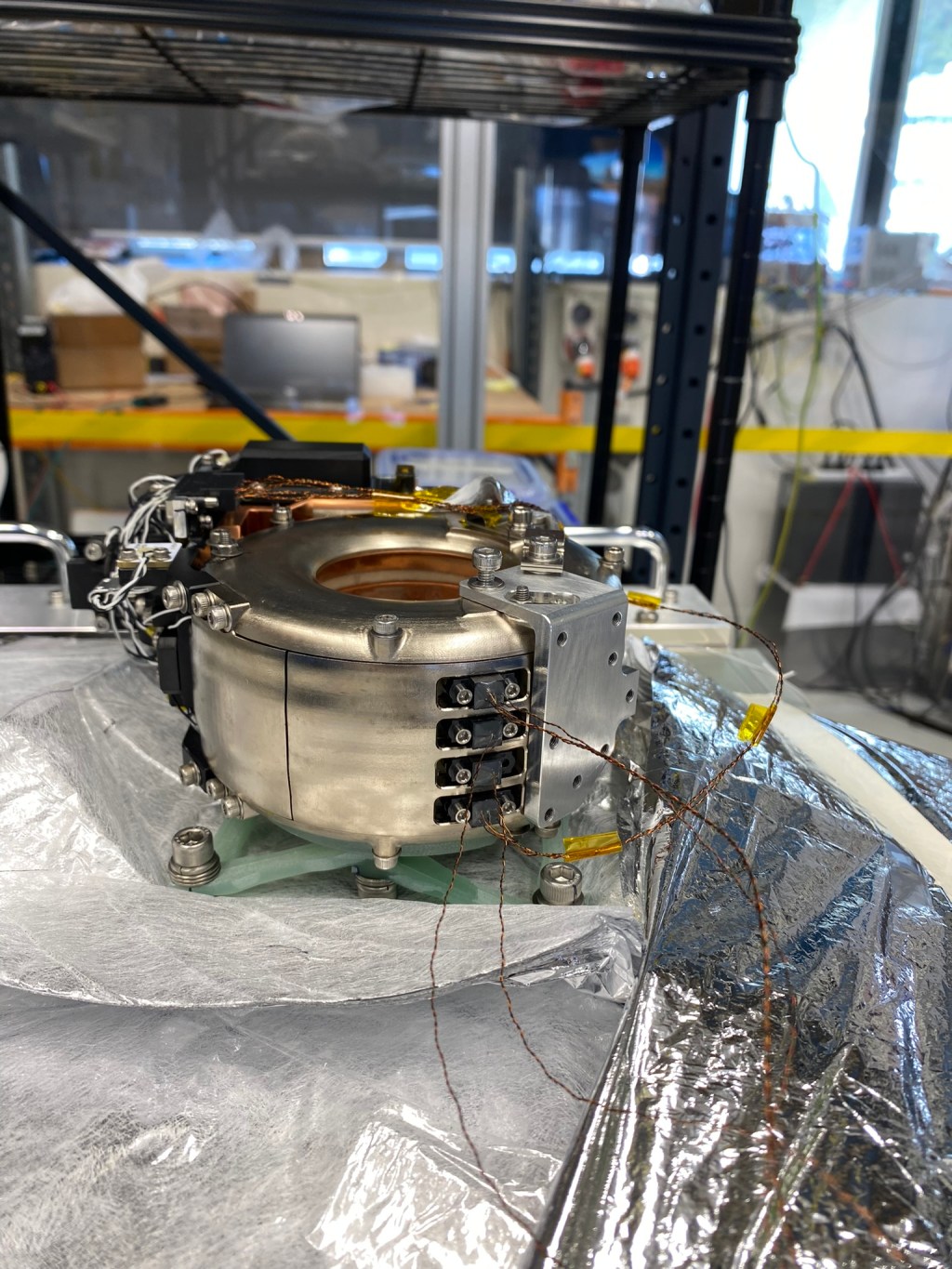
Header Image: Hēki magnet (enclosed in steel shield) during assembly process at Paihau-Robinson Research Institute.

 Paihau—Robinson Space Blog
Leave a comment