
This week is an exciting milestone for Hēki! We’re celebrating the half-way point for Hēki’s 15-week primary mission, which is scheduled to complete in mid-January. Our team is intrigued by what we’ve learned so far, and we are currently in discussions to extend Hēki’s mission, perhaps through April 2026… we’ll provide more news on that when we have it!
As discussed in this post, Hēki has already completed almost all of its primary mission objectives, though we will only consider the last two goals fully achieved once the primary mission is successfully completed. Once that is done, we’ll continue Hēki operations throughout the extended mission to collect “bonus” science and engineering data. We want to take full advantage of the wonderful opportunity we have to fully characterise Hēki’s performance in space.
In preparation for this extended mission, the Hēki team has been developing a new set of tests to explore how – and if – Hēki’s performance changes over a range of operating conditions. These tests include characterising the magnet performance over a much wider range of operating temperatures, examining the response of the radiation sensors if the magnetic polarity is reversed, comparing how quickly the magnetic field rises and falls to data collected during pre-launch testing, with many other ideas still in work.
The data collected from these experiments – along with a much more extensive set of tests to be completed once Hēki returns to our lab – will be crucial to validating the current design and our modelling of its performance. More importantly, this knowledge will drive the design, analysis, and test programs for Hēki and Kōkako’s successors.
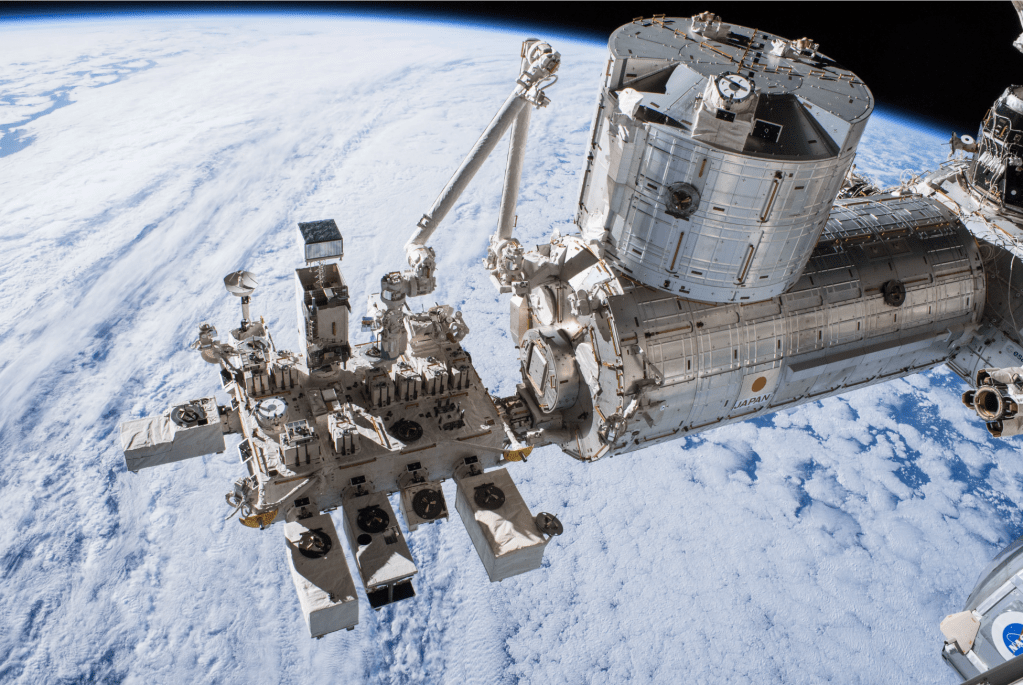
Header image: the Japanese Experiment Module-Exposed Facility on the International Space Station. This photo taken before Hēki’s installation, but the Nanoracks External Plaform (which currently houses Hēki) is visible in the lower centre of the image. Credit: NASA
 Paihau—Robinson Space Blog
Leave a comment