
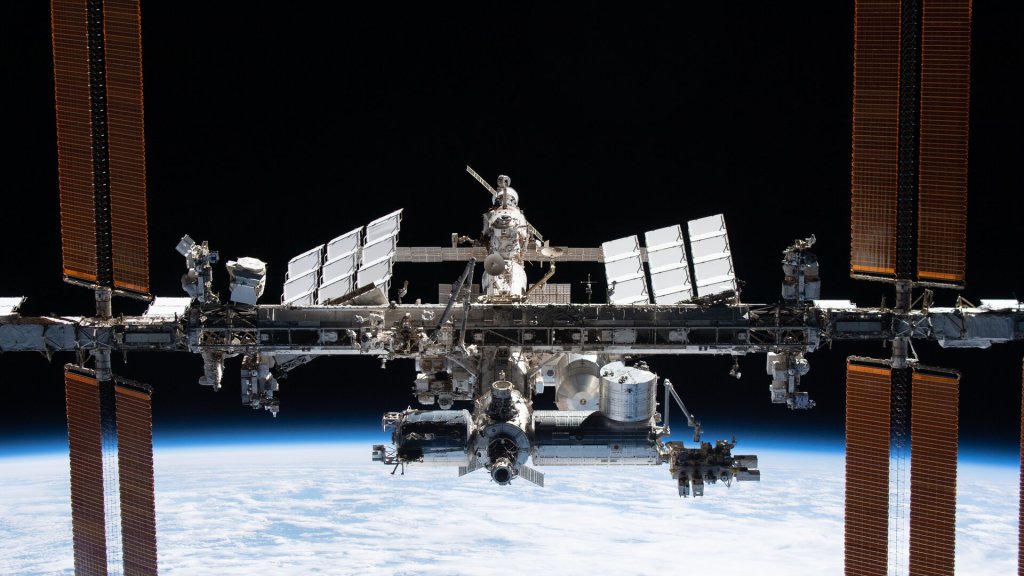
The Hēki team and colleagues at Voyager Technologies (formerly Nanoracks) recently completed the final checkouts required before launching the Hēki technology demonstration payload to the international space station (ISS) in mid 2025.
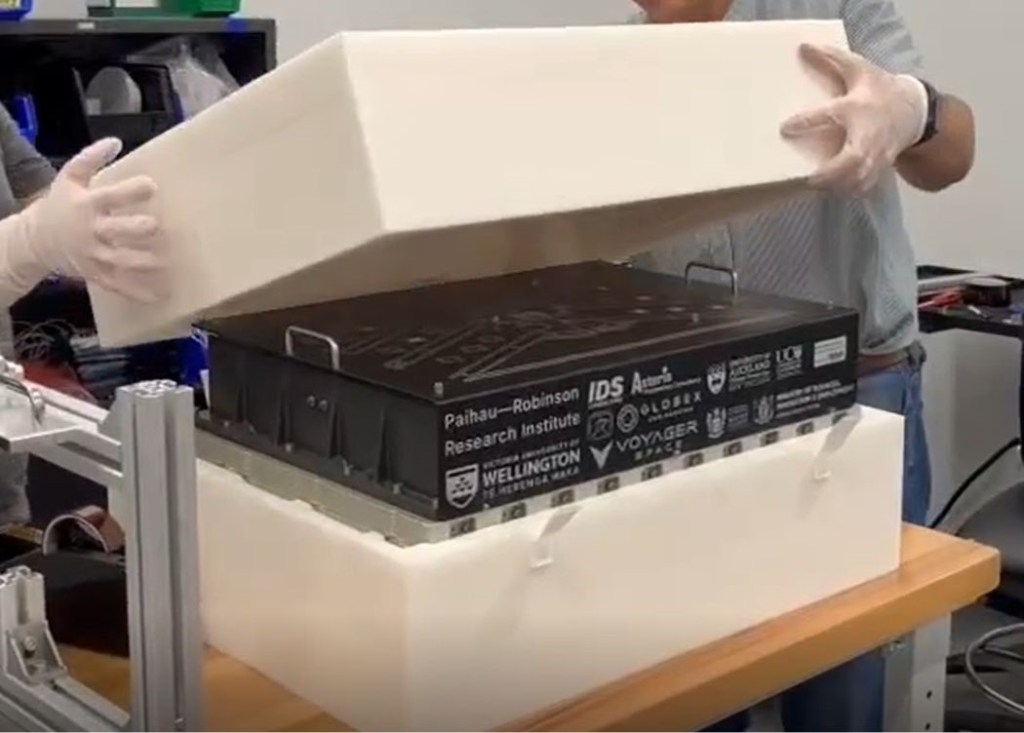
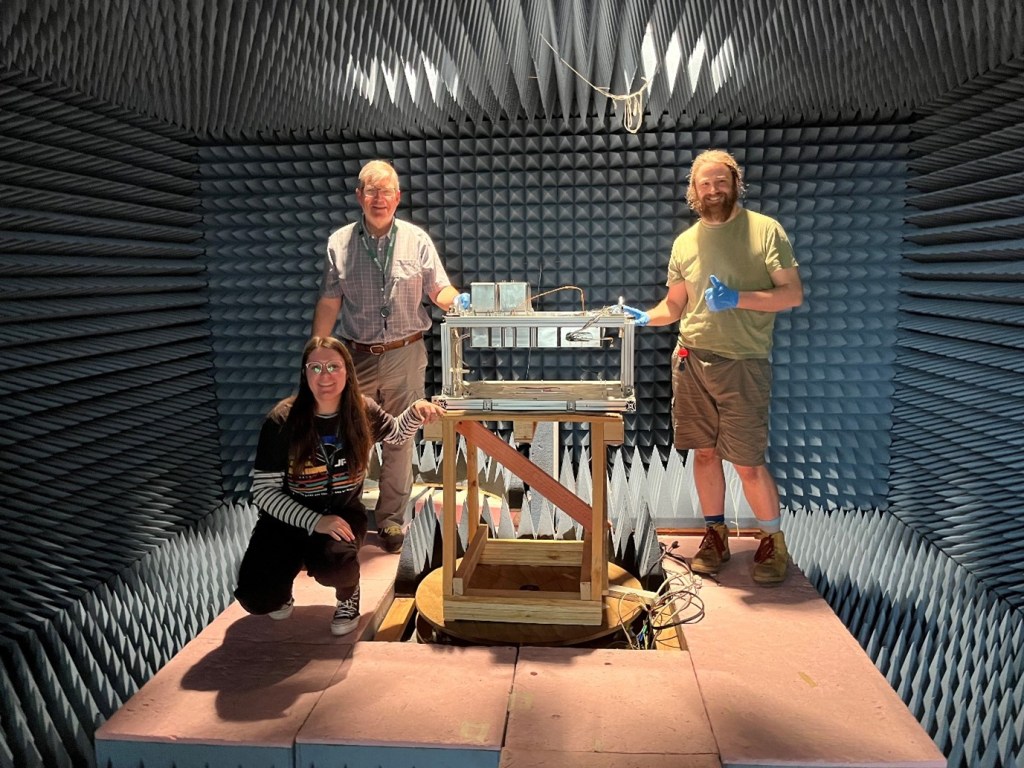
The pre-launch checks included a NASA – National Aeronautics and Space Administration inspection to confirm that Hēki is safe for astronauts to handle – no sharp edges to snag a spacesuit glove! – as well as power and data flow compatibility testing with a simulator of the ISS’ NanoRacks External Platform (NREP). Hēki will be integrated with the NREP by astronauts after its arrival at the ISS. With testing and inspection successfully completed, Hēki was packed in a protective foam “clamshell” to mitigate the vibration and shock the experiment will experience during launch.
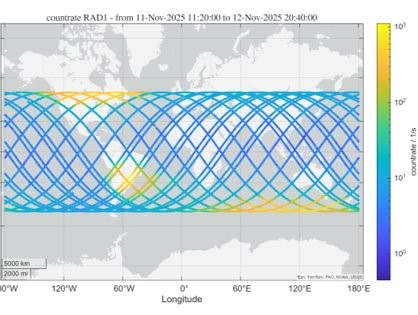
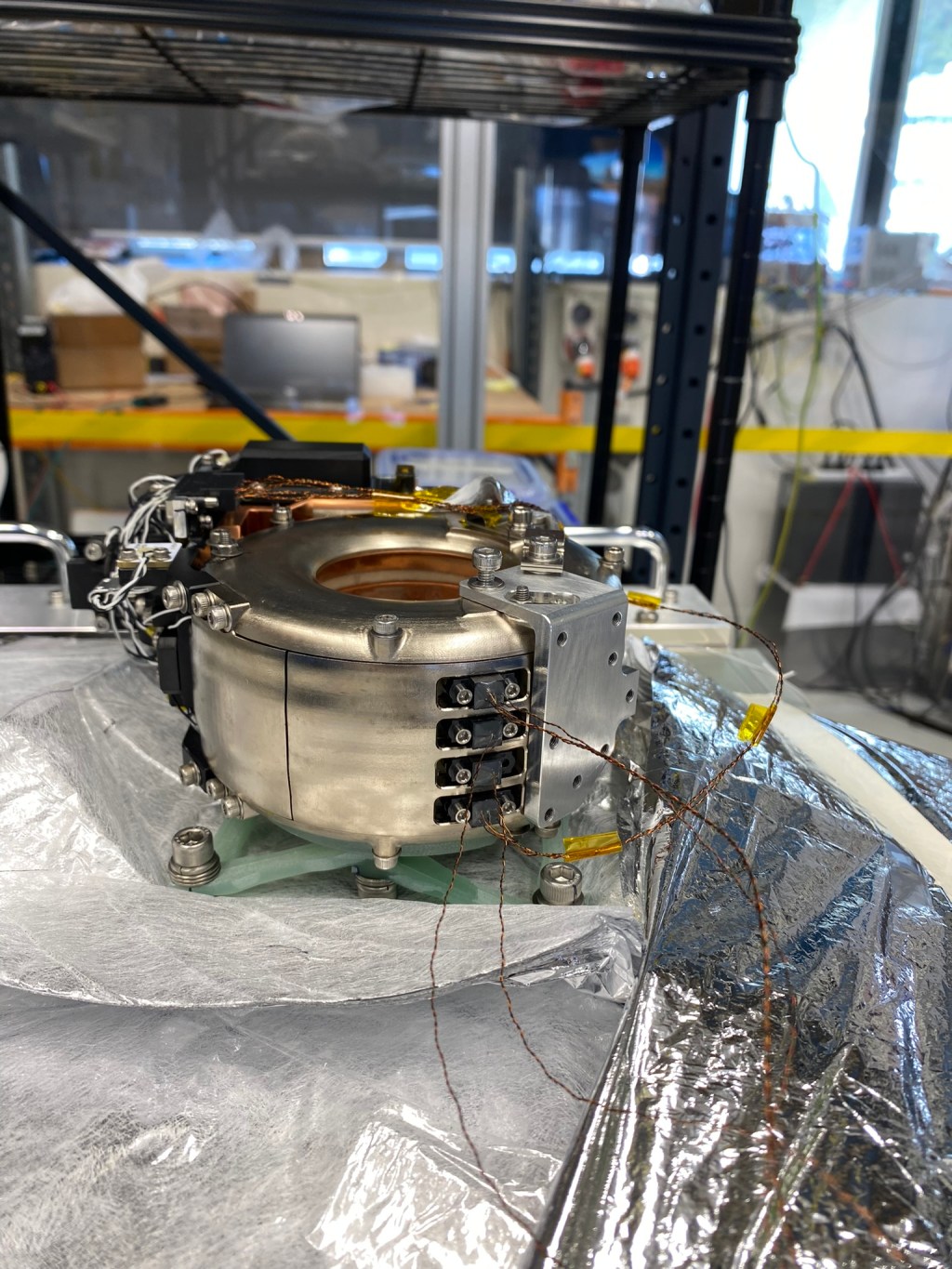
Hēki will validate that several novel technologies are compatible with launch and operations in space. These experimental components will improve the efficiency of spacecraft ion thrusters and include a high-temperature superconducting magnet, its “flux pump” power supply, and custom control electronics. Hēki was designed, built, and tested at Te Herenga Waka/Victoria University of Wellington’s Paihau—Robinson Research Institute, with team members from IDS Consulting, Asteria Engineering Consultancy, University of Auckland, and University of Canterbury contributing to its successful completion. Development of Hēki was enabled by a grant from Aotearoa New Zealand’s Ministry of Business, Innovation and Employment. Researchers at the Czech Technical University in Prague contributed radiation sensors to assess the effect of Hēki’s magnetic field on the local charged particle environment. Voyager Technologies will coordinate Hēki’s launch, deployment, and operations with the ISS.

 Paihau—Robinson Space Blog
Leave a comment